💡 Photobiological Agricultural Physics: Commercial LED Horticultural Lighting
A rigorous scientific treatise detailing modern solid-state horticultural lighting in Controlled Environment Agriculture. We analyze Photosynthetically Active Radiation (PAR), Daily Light Integral (DLI) target kinematics, High-Pressure Sodium (HPS) vs. LED electrical efficacy (µmol/J), phytochrome photostationary state (PSS), and far-red (730 nm) Emerson enhancement kinetics.
In high-latitude agricultural regions (Northern Europe, Canada, the Northern United States, and East Asia), natural solar irradiance drops precipitously during the autumn, winter, and early spring months. Day lengths shrink to fewer than 8 hours, and low solar angles combined with persistent cloud cover reduce incoming natural sunlight to fractions of summer levels. For commercial greenhouse producers cultivating high-wire vine crops, culinary herbs, or cut flowers, natural winter light levels fall far below the minimum photosynthetic compensation threshold required to sustain commercially viable yields.
The deployment of Supplemental Horticultural Lighting has revolutionized controlled environment horticulture, transforming seasonal summer operations into year-round continuous food production factories. Over the past decade, the rapid maturation of solid-state Light Emitting Diode (LED) technology has triggered a monumental technological shift away from legacy High-Pressure Sodium (HPS) luminaires. In this comprehensive dissertation, we examine the physics of photosynthetic photon flux, the calculation of Daily Light Integrals (DLI), spectral tuning kinematics, far-red photomorphology, and the thermodynamic engineering required to operate multi-megawatt greenhouse lighting grids.
1. Photosynthetic Metrics: Lux vs. Lumens vs. PAR vs. PPFD
To engineer horticultural lighting systems, one must completely discard human-centric photometric units. Units such as Lumens and Lux are calibrated to the human eye’s photopic sensitivity curve (peaking sharply in the green spectrum at 555 nm), which has zero correlation with plant photosynthetic kinetics. Plants utilize photons across a broad spectral waveband defined as Photosynthetically Active Radiation (PAR, 400 to 700 nm), recently expanded by modern researchers to include Far-Red (ePAR, 400 to 750 nm).
Horticultural lighting engineers utilize three foundational physical metrics:
- Photosynthetic Photon Flux (PPF, measured in µmol/s): The total quantity of PAR photons emitted by a luminaire per second across all directions. This metric defines the absolute photon output of the light fixture.
- Photosynthetic Photon Flux Density (PPFD, measured in µmol/m²/s): The number of PAR photons striking a specific one-square-meter surface of crop canopy per second. PPFD quantifies the instantaneous light intensity received by the plant.
- Electrical Photosynthetic Efficacy (PPE, measured in µmol/Joules): The photon output per unit of electrical energy consumed. Modern horticultural LEDs achieve PPE ratings of 3.0 to 3.8 µmol/J, compared to legacy HPS fixtures which top out at 1.7 to 1.9 µmol/J. This represents a staggering 80% to 100% improvement in electrical efficiency.
2. Daily Light Integral (DLI) Physics and Yield Kinetics
Instantaneous PPFD tells only part of the story. Crop growth is governed by the cumulative total volume of photosynthetic photons delivered to the canopy over a complete 24-hour photoperiod—a metric designated as the Daily Light Integral (DLI), expressed in moles of photons per square meter per day (mol/m²/day):
DLI (mol/m²/day) = PPFD (µmol/m²/s) × Photoperiod (Hours) × 3,600 (seconds/hour) ÷ 1,000,000 (µmol/mol)
For example, running an LED supplemental lighting grid delivering 220 µmol/m²/s over an 18-hour photoperiod supplies an artificial DLI of:
220 × 18 × 3600 ÷ 1,000,000 = 14.26 mol/m²/day
The Universal 1% Light-to-Yield Rule: Extensive empirical agronomic trials across commercial greenhouses confirm that for light-hungry fruiting crops (tomatoes, sweet peppers, cucumbers), each additional 1 mol/m²/day of cumulative DLI increases commercial harvestable yield by 0.8% to 1.2% up to the crop’s light saturation threshold. In northern winters where natural solar DLI drops to a meager 3 to 5 mol/m²/day, supplemental LEDs delivering an additional 15 to 20 mol/m²/day boost winter fruit yields by 300% to 400%, sustaining profitable commercial harvest volumes during peak winter pricing windows.
| Commercial CEA Crop | Minimum Baseline DLI (Survival) | Commercial Target DLI (High Yield) | Typical Photoperiod | Supplemental PPFD Required |
|---|---|---|---|---|
| High-Wire Vine Tomato | 12 – 14 mol/m²/day | 22 – 30 mol/m²/day | 16 – 18 Hours | 200 – 300 µmol/m²/s |
| English Cucumber | 14 – 16 mol/m²/day | 25 – 32 mol/m²/day | 18 – 20 Hours | 220 – 320 µmol/m²/s |
| Sweet Bell Pepper | 12 – 14 mol/m²/day | 20 – 26 mol/m²/day | 16 – 18 Hours | 180 – 250 µmol/m²/s |
| Commercial Head Lettuce | 8 – 10 mol/m²/day | 14 – 17 mol/m²/day | 16 – 18 Hours | 150 – 200 µmol/m²/s |
| Culinary Basil & Herbs | 10 – 12 mol/m²/day | 16 – 20 mol/m²/day | 18 – 20 Hours | 160 – 220 µmol/m²/s |
3. High-Pressure Sodium (HPS) vs. LED: Thermodynamics and Microclimates
While the electrical efficiency advantage of LEDs is well-documented, the thermodynamic operational differences between HPS and LED installations require profound modifications to greenhouse climate management:
The Radiant Infrared Difference: A legacy 1,000W HPS fixture converts approximately 30% of its electrical energy into PAR light, but emits a staggering 50% of its energy as direct downward-beaming thermal infrared radiation (radiant heat). This intense radiant heat beam strikes the upper crop canopy directly, warming top leaves by 2.5°C to 4.0°C above ambient air temperature. In cold winter climates, growers historically relied on this HPS radiant heat to warm their crops, reducing under-bench boiler heating requirements.
The ‘Cold Light’ Reality of LEDs: In contrast, high-efficiency horticultural LEDs convert 50% to 55% of electrical energy into PAR photons and emit virtually zero downward radiant infrared heat. Instead, waste heat from LEDs conducts backward into the aluminum heat-sink casing, warming the air at the structural truss level near the roof peak. When a commercial facility retrofits from HPS to LED, canopy temperatures drop by 2°C to 3°C! If the grower fails to adjust the climate computer, crop transpiration stalls and development rates slow down. Retrofitting to LEDs mandates increasing under-bench hydronic pipe temperatures or installing vertical destratification fans to harvest the warm air trapped near the LED fixtures and push it back down into the root zone.
⚠️ Mechanical Engineering Warning: LED Heat Sink Management
Never operate passive-chilled high-power LED fixtures in stagnant unventilated roof spaces. LED semiconductor junction temperatures must remain below 70°C to prevent thermal phosphor degradation and premature diode failure. Ensure that Horizontal Air Flow (HAF) fans maintain minimum air velocities of 0.3 m/s across luminaire aluminum heat sinks.
4. Far-Red Photobiology (700 to 750 nm) and the Emerson Effect
One of the most groundbreaking photobiological discoveries of the past decade is the realization that Far-Red light (700 to 750 nm)—long dismissed by classical plant biologists as photosynthetically inactive—plays a profound role in driving whole-plant photosynthetic efficiency:
1. The Emerson Enhancement Effect: Photosynthesis requires two separate pigment-protein complexes operating in series: Photosystem II (PSII, optimized for 680 nm red light) and Photosystem I (PSI, optimized for 700 to 730 nm far-red light). When crops are illuminated with pure red light alone, PSII is over-excited while PSI is light-starved, creating a rate-limiting biochemical bottleneck in photosynthetic electron transport. Adding far-red photons excites PSI in perfect synchrony, unlocking the bottleneck. Combining 660 nm red photons with 730 nm far-red photons delivers a combined photosynthetic assimilation rate that is 8% to 15% higher than the sum of the two wavebands delivered independently—a phenomenon known as the Emerson Enhancement Effect.
2. Phytochrome Photostationary State (PSS) and Canopy Extension: Far-red light directly regulates phytochrome photoreceptors (PhyA and PhyB), which switch between active (Pfr) and inactive (Pr) forms based on the Red-to-Far-Red (R:FR) ratio. Supplementing crop canopies with calibrated doses of far-red light lowers the PSS value, triggering moderate cell expansion. In vine crops, this causes leaves to expand by 10% to 20% in surface area, creating larger photosynthetic solar panels that capture more light and accelerate total biomass accumulation.
5. Dynamic DLI Scheduling and Real-Time Grid Demand Response
In high-tech commercial facilities, supplemental lighting is no longer operated on fixed static timers. Modern climate computers integrate Dynamic DLI Lighting Algorithms connected to rooftop solar pyranometers and real-time electrical grid pricing:
Sunlight-Compensated Dimming: The climate computer continuously integrates incoming natural solar PAR. On a bright, cloudless winter morning when natural sunlight delivers 250 µmol/m²/s of PPFD, the computer automatically dims the LED fixtures to 20% power or switches off alternate luminaire banks. Conversely, when heavy storm clouds roll in at midday, the LEDs throttle up to 100% output to maintain steady photosynthetic flux. Once the crop’s daily target DLI (e.g., 25 mol/m²/day) is mathematically achieved, the lights turn off early, preventing wasteful over-lighting.
Electrical Grid Arbitrage: Large commercial facilities consuming 5 to 20 Megawatts of lighting power participate in wholesale electricity demand-response programs. When electrical grid prices spike during late afternoon peak consumer hours ($0.50+/kWh), the climate computer automatically ramps LED intensity down to minimum levels, shifting the supplemental lighting photoperiod to deep night hours (midnight to 6:00 AM) when electricity rates plunge to off-peak pricing ($0.03/kWh), slashing monthly utility bills by 35% to 50%.
6. Inter-Lighting vs. Top-Lighting in High-Wire Vine Crops
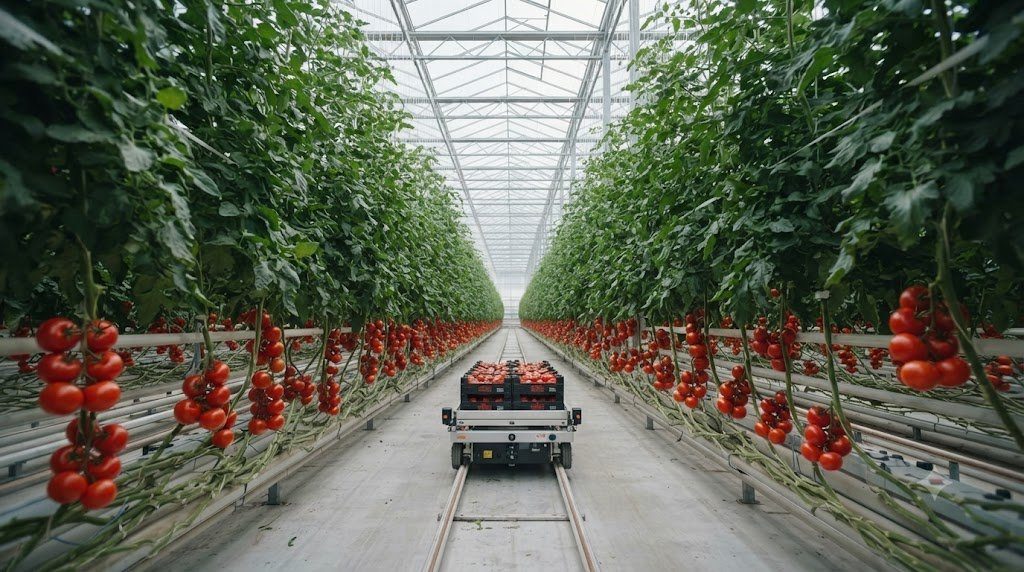
In commercial high-wire vine crops (indeterminate tomatoes, cucumbers), traditional overhead top-lighting encounters severe optical limitations. As tomato vines grow to heights of 3.5 to 5.0 meters, the dense upper vegetative leaves intercept nearly 85% of incoming overhead light. Lower and middle leaves—where developing fruit clusters are actively swelling—remain shaded in deep darkness, operating below their light compensation point.
Hybrid LED Top + Inter-Lighting: Modern CEA engineering utilizes a Hybrid Lighting Architecture: 60% to 70% of total photon flux is delivered via overhead LED top-lights, while 30% to 40% is delivered via LED Inter-Lighting Bars suspended directly inside the vertical plant canopy at heights of 1.5 to 2.0 meters. Double-sided LED inter-lighting bars project photosynthetically tuned light directly onto middle leaves, activating dormant photosynthetic machinery, increasing localized sap flow, and boosting total fruit cluster harvest weight by 18% to 24% compared to overhead top-lighting alone.
7. 10-Year Capital Payback and Investment Return (ROI)
Investing in commercial greenhouse LED infrastructure represents a substantial capital expenditure. Equipping a 1-hectare greenhouse with high-efficiency 3.6 µmol/J commercial LEDs (delivering 220 µmol/m²/s) requires a turnkey capital outlay of approximately $280,000 to $420,000.
However, the economic return is extraordinary: by enabling continuous year-round winter harvesting of premium vine crops, growers generate an additional 35 to 45 kg of tomatoes per square meter annually. Across a 10,000 m² facility, this yield dividend translates to 350,000 to 450,000 kg of fresh winter produce commanding peak wholesale pricing of $2.50 to $3.50 per kg, generating over $800,000 in additional annual gross revenue. After deducting electrical power operating costs, the LED investment delivers full capital payback within 2.2 to 3.0 operating seasons, establishing permanent commercial competitive advantage.
8. Spectral Tuning: Broad-Spectrum White vs. Pink (Red/Blue) Formulations
During the early era of horticultural LED commercialization, fixtures utilized narrow-band monochromatic red (660 nm) and blue (450 nm) diodes, casting an unnatural magenta or ‘blurple’ glow across the greenhouse. While chlorophyll pigments a and b absorb strongly in red and blue wavebands, research has revealed critical agronomic drawbacks to monochromatic lighting:
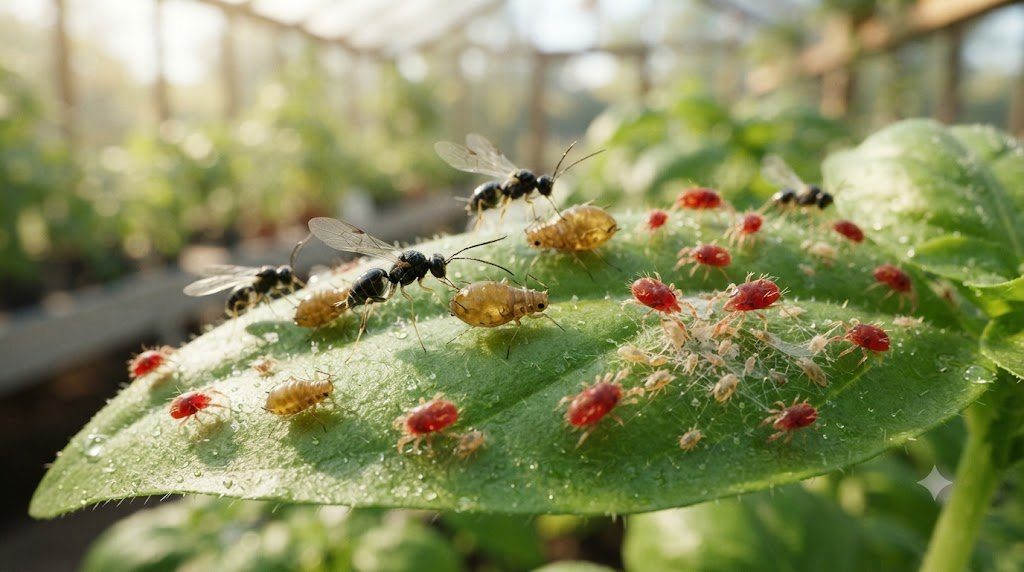
- Worker Ergonomics and Scouting Hazards: Human eyes cannot distinguish subtle color gradations under magenta light. Crop scouts cannot identify early-stage pest infestations (spider mites, aphids) or subtle nutrient chlorosis patterns, leading to delayed disease identification. Furthermore, working for 8 hours under monochromatic light causes severe visual fatigue and headaches for greenhouse personnel.
- Green Photon Penetration (500 to 600 nm): Monochromatic blue and red photons are absorbed almost entirely by chloroplasts in the top 100 microns of the upper leaf surface. Green photons, in contrast, penetrate deeply through the leaf mesophyll, exciting chloroplasts on the lower side of the leaf and passing downward into lower canopy tiers. Modern high-efficiency fixtures deploy Broad-Spectrum Full-Spectrum White LEDs with phosphor coatings, supplemented with targeted deep-red (660 nm) diodes, delivering superior whole-canopy light penetration and natural ergonomic working conditions.
9. End-of-Day (EOD) Far-Red Signaling and Flowering Kinetics
In addition to daytime photosynthetic enhancement, solid-state LEDs permit precise photoperiodic signaling through End-of-Day Far-Red (EOD-FR) Pulses. In nature, as the sun dips below the horizon at dusk, the direct beam solar spectrum shifts dramatically: Rayleigh scattering removes blue and red light, leaving sunset light enriched in far-red wavelengths (730 nm).
Plants use this sunset spectral shift as a biological clock trigger to set their circadian rhythms. By applying a 15-to-30-minute pulse of pure far-red LED light immediately following main photoperiod shutoff, commercial growers rapidly convert active phytochrome (Pfr) back into inactive phytochrome (Pr). In short-day photoperiodic crops (such as chrysanthemums and poinsettias), this rapid phytochrome reset accelerates floral initiation by 4 to 7 days. In day-neutral indeterminate crops like tomatoes, EOD-FR signaling triggers rapid carbohydrate translocation from leaves into swelling fruit clusters overnight, maximizing fruit Brix sugar content and harvest firmness.
10. Electrical Grid Infrastructure and Harmonic Distortion Mitigation
Operating multi-megawatt LED lighting installations introduces severe electrical engineering challenges that greenhouse operators must navigate with local utility authorities:
Power Factor and Total Harmonic Distortion (THD): Unlike legacy magnetic ballasts, modern solid-state LED luminaires utilize high-frequency switch-mode electronic power supplies (drivers). If low-cost drivers are specified, the rapid switching of electrical current introduces non-linear loads onto the greenhouse AC electrical distribution bus, generating high Total Harmonic Distortion (THD > 20%) and poor Power Factors (PF < 0.90). High harmonics overheat substation transformers, trigger nuisance circuit breaker trips, and incur punitive financial penalties from electrical utility operators.
Commercial CEA installations mandate industrial-grade LED drivers with certified Active Power Factor Correction (PFC) achieving PF > 0.98 and THD < 10% across 0-10V or DALI dimming ranges. Additionally, central transformer stations must incorporate harmonic-mitigating zig-zag isolation transformers and transient surge suppression to protect sensitive semiconductor diode arrays from catastrophic lightning strikes and grid voltage sags.