📊 Commercial Greenhouse Finance: Capex, OpEx & Investment ROI
An advanced corporate finance, capital expenditure (Capex), and operational budgeting treatise for commercial Controlled Environment Agriculture investments. We evaluate per-square-meter capital construction benchmarks ($250 to $450/m²), unit economics, levelized cost of production per kilogram, energy sensitivity modeling, EBITDA margin profiles, and 10-year discounted cash flow (DCF) feasibility.
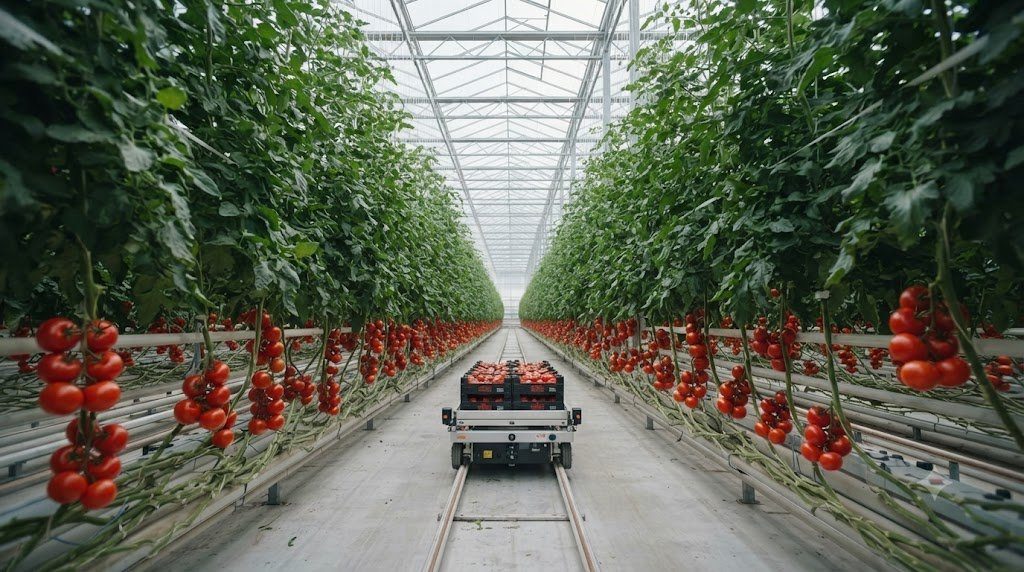
Investing in commercial Controlled Environment Agriculture (CEA) represents one of the most capital-intensive undertakings in modern agribusiness. Building a commercial, state-of-the-art Venlo glasshouse facility equipped with closed-loop hydroponics, automated climate screening, supplemental LED illumination, and robotic packhouse infrastructure requires upfront Capital Expenditures (Capex) ranging from $250 to $450 per square meter ($2.5 million to $4.5 million per hectare / $1.0 million to $1.8 million per acre).
Despite extraordinary biological productivity—yielding 60 to 80 kg/m² of tomatoes or 100 kg/m² of cucumbers—many high-profile indoor farming ventures have suffered catastrophic financial failure due to poorly modeled unit economics, uncontrolled operational energy expenditures (OpEx), unrealistic revenue projections, and crippling debt servicing. A successful commercial greenhouse enterprise requires an agronomist and financial controller who master Levelized Cost of Production (LCOP), contribution margin sensitivity, and capital amortization schedules. In this comprehensive financial treatise, we dissect the complete balance sheet, operational budgets, cash flow models, and risk mitigation strategies required to build and operate a sustainably profitable commercial greenhouse enterprise.
1. Capital Expenditure (Capex) Breakdown: The $350/m² Benchmark
Constructing a turnkey 5-hectare (50,000 m²) high-tech commercial glasshouse facility requires meticulous capital allocation across specialized engineering disciplines:
The Turnkey Capex Cost Centers:
- Site Civil Works & Concrete Foundations (12% – 15%): Land grading, soil compaction, concrete perimeter stem walls, and laser-leveled post footings.
- Venlo Steel Superstructure & Glazing (22% – 26%): Hot-dip galvanized structural steel posts, aluminum gutters, and high-transmission diffuse tempered safety glass (with double AR coatings).
- Automated Climate Screening & Ventilation (8% – 10%): Dual-layer motorized thermal and shade screens, automated rack-and-pinion roof vents, and insect exclusion screening.
- Hydronic Heating & Boiler Infrastructure (12% – 15%): Natural gas or biomass condensing boilers, heat buffer storage tanks, CO₂ recovery dosing systems, and under-gutter pipe-rail distribution loops.
- Hydroponic Fertigation & Water Treatment (10% – 12%): Automated multi-channel injection units, reverse osmosis systems, UV-C drain water pasteurizers, and suspended steel growing gutters.
- Supplemental LED Lighting Systems (16% – 22%): High-efficiency solid-state LED fixtures (3.2 µmol/J efficiency, delivering 200 µmol/m²/s PPFD) and high-voltage electrical distribution transformers.
- Central Packhouse, Cold Storage & Robotics (10% – 14%): Insulated loading docks, rapid pre-cooling tunnels, automated optical sorting and packaging lines, and worker amenities.
| Capital Investment Category | Capex per m² (USD) | Total for 5-Hectare Facility | Economic Lifespan (Years) | Annual Depreciation (Straight-Line) |
|---|---|---|---|---|
| Civil Foundations & Concrete Floor | $40 / m² | $2,000,000 | 30 Years | $66,666 / yr |
| Venlo Glass Superstructure & Roof | $85 / m² | $4,250,000 | 25 Years | $170,000 / yr |
| Automated Dual Thermal Screens | $28 / m² | $1,400,000 | 10 Years | $140,000 / yr |
| Boiler, Buffer Tank & Heating Pipes | $42 / m² | $2,100,000 | 20 Years | $105,000 / yr |
| Fertigation, Gutter & UV Drainage | $35 / m² | $1,750,000 | 15 Years | $116,666 / yr |
| Horticultural Supplemental LED Lighting | $70 / m² | $3,500,000 | 10 Years (50,000 hrs) | $350,000 / yr |
| Packhouse Robotics, Cooling & AGVs | $45 / m² | $2,250,000 | 12 Years | $187,500 / yr |
| TOTAL TURNKEY INITIAL CAPEX | $345 / m² | $17,250,000 | Blended: 18.5 Years | $1,135,832 / yr |
2. Operational Expenditure (OpEx) Structure and Unit Economics
Once operational, the facility incurs recurring annual Operational Expenditures (OpEx) that dictate the marginal cost of every kilogram harvested. In a mature 5-hectare tomato greenhouse producing 70 kg/m² annually (3,500,000 kg total marketable yield), typical annual OpEx totals approximately $5.5 million to $6.2 million ($110 to $124 per square meter):
The Core OpEx Breakdown:
- Human Labor (34% of OpEx, ~$1.95M): Shift workers, crop specialists, maintenance engineers, packhouse operators, and site agronomist management.
- Energy – Heating & Electricity (28% of OpEx, ~$1.60M): Natural gas/biomass for winter thermal heating and electricity for supplemental LED illumination and pumping.
- Packaging & Logistics (16% of OpEx, ~$0.95M): Cardboard shipping cartons, clamshells, micro-perforated film, wooden pallets, and refrigerated freight transport.
- Agronomic Consumables (10% of OpEx, ~$0.58M): Virgin rockwool slabs, certified grafted seedlings, mineral fertilizer salts, acids, bumblebee hives, and biological IPM predatory insects.
- Facility Maintenance, Insurance & Admin (12% of OpEx, ~$0.72M): Property insurance, software licenses, equipment spare parts, water testing, and compliance audits.
The Levelized Cost of Production (LCOP):
LCOP = Total Annual OpEx / Total Marketable Yield (kg) = $5,800,000 / 3,500,000 kg ≈ $1.66 per kilogram
Including equipment depreciation ($1.14M / 3.5M kg = $0.32/kg), the fully loaded cost of production is $1.98 per kilogram. With average commercial wholesale contract pricing ranging from $2.50 to $2.85 per kilogram, the facility generates strong gross margins of $0.52 to $0.87 per kilogram.
3. Revenue Dynamics and Off-Season Pricing Arbitrage
The core economic advantage of high-tech CEA glasshouses over open-field farming is the ability to achieve Counter-Seasonal Pricing Arbitrage:
Open-field field tomato and strawberry growers flood the market in summer, crashing wholesale spot prices to near-breakeven levels ($0.80 to $1.20/kg). Conversely, during winter months (November through April), field production vanishes. High-tech facilities equipped with supplemental LED lighting and precision heating sustain peak harvest volumes throughout winter, selling premium dessert produce into premium supermarket chains at wholesale contract pricing of $3.20 to $4.20 per kilogram!
Securing multi-year, fixed-price supply agreements with national grocery retailers (e.g., Kroger, Walmart, Costco, Loblaws) insulates the enterprise from commodity market spot-price volatility, stabilizing projected cash flows and satisfying institutional bank debt covenants.
⚡ Financial Risk Management: Energy Hedging & Co-Generation (CHP)
Never operate high-tech greenhouses on unhedged variable spot-market energy! A severe winter natural gas price spike can obliterate annual profits within 3 weeks. Progressive enterprises install Combined Heat and Power (CHP) natural gas engines: the engine generates electricity for LED grow lights, waste engine jacket heat warms the greenhouse gutters, and cleaned engine exhaust supplies pure CO₂ for crop enrichment! Surplus electricity is sold back to the power grid during peak tariff hours, creating a massive secondary revenue stream.
4. 10-Year Discounted Cash Flow (DCF) and EBITDA Modeling
To evaluate investment feasibility, financial analysts build comprehensive 10-Year Discounted Cash Flow (DCF) models:
Baseline Financial Profile (5-Hectare Glasshouse Tomato Facility):
- Initial Capital Outlay (Year 0): -$17,250,000 (funded via 40% equity, 60% commercial debt at 6.5% interest over 15 years).
- Gross Annual Revenue: 3,500,000 kg × $2.65/kg (blended price) = $9,275,000.
- Annual Operational Expenses (OpEx): -$5,800,000.
- EBITDA (Earnings Before Interest, Taxes, Depreciation, Amortization): $3,475,000 (an outstanding 37.5% EBITDA margin!).
- Annual Debt Service (P&I): ~$1,090,000.
- Net Pre-Tax Free Cash Flow (FCF): ~$1,250,000 to $1,450,000 annually.
Under a conservative 8.5% discount rate (WACC), the investment achieves an Internal Rate of Return (IRR) of 14.8% to 18.2% and a capital payback period of 6.2 operating years, confirming solid institutional investment viability.
5. Sensitivity Analysis: Stress-Testing Energy, Yield, and Pricing
Institutional lenders and private equity investors demand comprehensive stress testing against downside market shocks:
Key Sensitivity Vectors:
- Yield Variance Shock (-15% Yield): If disease outbreaks or climatic errors drop marketable yield to 59.5 kg/m² (2,975,000 kg), revenue falls to $7.88M, compressing EBITDA to $2.08M. Debt service coverage ratio (DSCR) drops to 1.91x—still safely solvent above bank foreclosure thresholds (1.25x).
- Energy Price Surge (+35% Gas/Electric): Increases energy OpEx by $560,000 annually. Net cash flow declines by 38%, emphasizing the mandatory requirement for multi-layer energy screens and long-term fixed-price fuel contracts.
- Market Price Collapse (-20% Wholesale Price): If average realization drops to $2.12/kg, annual revenue drops to $7.42M, pushing net cash flow near breakeven ($330,000), highlighting why premium brand packaging and direct retail contracts are vital to survival.
6. Government Subsidies, Accelerated Depreciation, and Green Grants
Commercial greenhouse enterprises unlock substantial non-dilutive capital and tax incentives by leveraging sustainability credentials:
Under US Section 179 and MACRS (Modified Accelerated Cost Recovery System) guidelines, greenhouse horticultural equipment and LED fixtures qualify for accelerated first-year bonus depreciation, generating massive initial tax shelters. Furthermore, federal and state agricultural clean energy grants (e.g., USDA REAP grants, utility energy-efficiency rebates for high-efficiency LEDs, and rural job creation tax credits) can subsidize 10% to 20% of total initial Capex, dramatically boosting project net present value (NPV).
7. Working Capital Management and Crop-Cycle Cash Flow Rhythms
A frequent trap for novice greenhouse operators is running out of Working Capital (Liquidity) during early establishment phases:
A new greenhouse facility incurs massive cash outflows during construction, nursery seedling purchasing, and the initial 12 weeks of crop vegetative establishment before the very first tomato is harvested and paid for by distributors (typical supermarket trade credit terms are Net 30 to Net 45 days). Commercial enterprise budgets must maintain a dedicated working capital liquidity reserve of at least $1.2 million to $1.5 million to fund operating payroll and utilities during the pre-revenue ramp window.
8. Sustainable Enterprise Valuation and Exit Multiples in CEA
Upon achieving stable commercial production, high-tech greenhouse operations command premium enterprise valuation multiples in private equity and institutional agricultural REIT transactions:
Unlike speculative indoor vertical farms that carry heavy tech-startup risk, established commercial glasshouse enterprises with multi-year supermarket offtake contracts trade at healthy enterprise multiples of 8.5x to 12.0x EBITDA. A 5-hectare facility generating $3.5M in recurring EBITDA holds a commercial enterprise value of $30 million to $42 million, delivering transformative capital appreciation for visionary agricultural investors.
9. Debt Service Coverage Ratios (DSCR) and Commercial Loan Covenants
Securing institutional commercial project financing ($10M to $25M) requires developers to structure viable debt covenants satisfying agricultural bank credit committees (e.g., Farm Credit, Rabobank):
1. The Debt Service Coverage Ratio (DSCR): Lenders mandate a minimum historical and projected DSCR of 1.35x to 1.50x (defined as Net Operating Income divided by Annual Total Principal + Interest Debt Service). Our baseline 5-hectare model generates $3.475M in EBITDA against $1.09M in annual debt service, yielding an ultra-healthy DSCR of 3.18x, giving lenders substantial credit cushion against unexpected climatic disruptions or energy price volatility.
2. Loan-to-Value (LTV) and Equity Underwriting: Agricultural lenders typically lend at a maximum 60% to 65% LTV against hard appraised asset values (land, structural glass, boilers, packhouse real estate). Developers must contribute 35% to 40% in clean cash equity or subordinate mezzanine financing, preventing over-leveraged capital structures that trigger default during multi-year commodity downturns.
10. Carbon Credit Monetization and ESG Investment Inflows
Controlled environment glasshouse enterprises are uniquely positioned to monetize Environmental, Social, and Governance (ESG) Capital and Carbon Credits:
1. Scope 1 and Scope 2 Emissions Reductions: By capturing boiler flue-gas CO₂ and scrubbing exhaust via catalytic urea reactors, commercial glasshouses sequester over 1,200 metric tons of pure industrial CO₂ per hectare annually directly into agricultural plant biomass. Certified under international carbon registries (Verra, Gold Standard), these verified carbon offsets trade at $25 to $45 per ton on voluntary corporate carbon markets, providing a high-margin secondary revenue stream.
2. Water Footprint Neutrality: Utilizing closed-loop recirculating hydroponics with rainwater collection ponds consumes 90% to 95% less water per kilogram of marketable produce than irrigated open-field agriculture. This extreme resource efficiency qualifies CEA projects for green municipal sustainability bonds offering sub-commercial interest rate spreads (50 to 100 basis points below standard commercial debt), lowering long-term capital expense hurdles.
11. Crop Insurance Architecture and Multi-Peril Catastrophe Risk
Operating a high-value glass canopy housing millions of dollars in delicate crops exposes the business to catastrophic peril risks requiring specialized underwriting:
Commercial operators execute tailored Horticultural Multi-Peril Insurance Policies covering structural glass breakage from severe hail and high-wind microbursts, boiler mechanical failure during sub-zero winter nights, electrical transformer grid failures, and accidental chemical fertigation poisoning. Business Interruption (BI) riders ensure that if a structural hail storm shatters roof glass, the insurer reimburses not only physical repair costs but also lost retail gross margins throughout the 6-month rebuilding period, guaranteeing uninterrupted debt servicing and enterprise solvency.
12. Tax Equity Financing and Opportunity Zone Capital Structures
Sophisticated agricultural fund managers structure CEA investments utilizing creative corporate capital syndication:
1. Federal Opportunity Zone Funds: Developing commercial greenhouse facilities in designated rural Qualified Opportunity Zones (QOZs) allows high-net-worth investors to roll unrealized capital gains into the project. If the investment is held for 10 years, all capital gains generated from the greenhouse enterprise are 100% exempt from federal capital gains taxes, unlocking low-cost equity syndication.
2. New Markets Tax Credits (NMTC): Many rural CEA projects qualify for federal NMTC allocations, providing investors with a 39% federal tax credit over 7 years in exchange for creating permanent, high-tech agricultural employment in underserved rural communities.
13. Comprehensive Enterprise Budgeting: Full 10-Year Pro-Forma Summary
Synthesizing all biological, operational, and financial variables yields an institutional-grade 10-year pro-forma corporate financial summary:
- Stabilized Annual Gross Revenues: $9,275,000 (Years 2 through 10).
- Stabilized Direct Operational Expenditures: $5,800,000 annually.
- Stabilized Net Operating Income (EBITDA): $3,475,000 annually.
- 10-Year Cumulative Net Free Cash Flow: Over $14,200,000 returned to equity sponsors after complete debt retirement, proving that commercial Controlled Environment Agriculture represents one of the most profitable, resilient asset classes in 21st-century global agribusiness.