🧪 Agronomic Solution Chemistry: Closed-Loop Recirculating Hydroponics
An advanced chemical and physical treatise detailing closed-loop recirculating hydroponic fertigation in commercial greenhouse production. We analyze electrical conductivity (EC), osmotic potential equations, pH chemical speciation, ion antagonism dynamics (K:Ca:Mg ratios), automated selective nutrient replenishment, and high-frequency runoff monitoring.
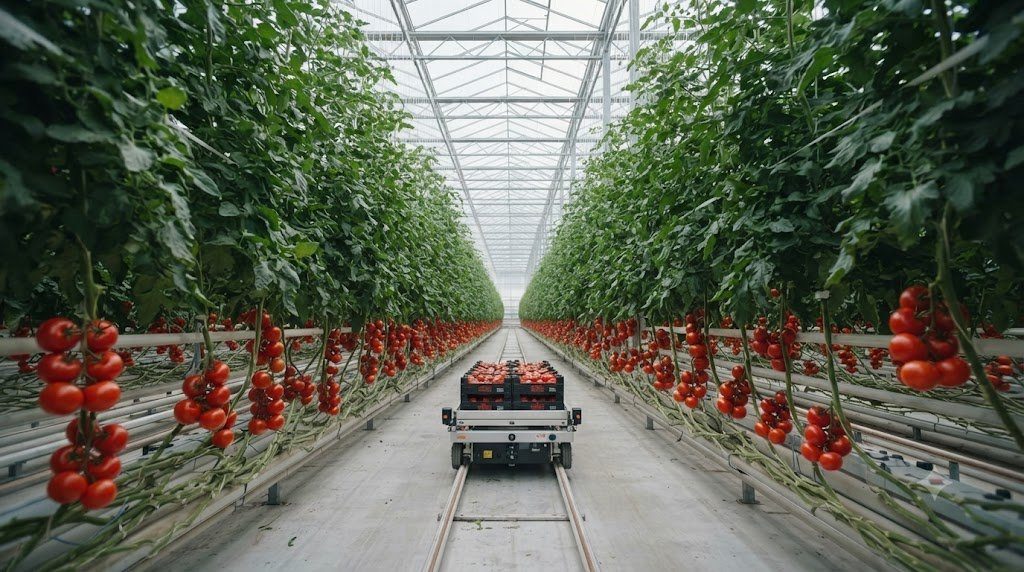
In modern commercial horticulture, transitioning from open-drain (drain-to-waste) cultivation to closed-loop recirculating hydroponic systems represents the single most significant advancement in sustainable water and nutrient management. Traditional open-drain operations discharge 20% to 35% of their total applied irrigation water and dissolved chemical fertilizers into surrounding soil tables, causing severe environmental groundwater contamination while squandering thousands of kilograms of high-grade mineral salts. Closed-loop recirculating systems capture 100% of greenhouse leachate runoff, sanitize the drainage stream, and re-inject it back into the primary crop feed line, achieving up to 95% water savings and 40% fertilizer cost reductions.
However, operating a closed recirculating loop presents profound biochemical challenges. As plants selectively absorb specific nutrient ions while rejecting non-essential elements, the chemical composition of the recirculating solution continuously shifts. Without sophisticated chemical monitoring and automated ion management, recirculating reservoirs suffer from acute ion antagonism, osmotic shock, sodium-chloride accumulation, and lethal micro-nutrient toxicity. In this comprehensive dissertation, we dissect the thermodynamic chemistry, mathematical equations, and automated fertigation strategies required to operate zero-discharge closed-loop commercial hydroponic systems with surgical precision.
1. Electrical Conductivity (EC) Thermodynamics and Osmotic Potential
In commercial fertigation, Electrical Conductivity (EC) serves as the primary operational proxy for total dissolved mineral salt concentration. Pure deionized water is an electrical insulator. When mineral salts (such as calcium nitrate, potassium sulfate, and magnesium sulfate) dissolve in water, they dissociate into charged cations (Ca²⁺, K⁺, Mg²⁺) and anions (NO₃⁻, SO₄²⁻, H₂PO₄⁻) that conduct electrical current between sensor electrodes.
The Osmotic Potential Equation: While EC measures ionic conductance, plants respond directly to Osmotic Potential (Ψ_s)—the physical force required for root cells to extract water molecules across root semipermeable membranes against the dissolved solute gradient. According to the Van ‘t Hoff equation, the osmotic pressure of a dilute electrolyte solution is directly proportional to its total molar ion concentration:
Ψ_s (in MegaPascals, MPa) ≈ -0.036 × EC (in mS/cm or dS/m)
Under a standard commercial vegetative feed recipe with an EC of 2.5 mS/cm, the root zone experiences an osmotic potential of approximately -0.09 MPa. In this range, root cellular turgor easily pulls water and dissolved nutrients into vascular xylem vessels.
However, if hot dry weather causes transpirational water uptake to outpace nutrient salt absorption, or if recirculating salts accumulate unmanaged, the root-zone substrate EC can surge to 4.5 or 5.5 mS/cm (Ψ_s = -0.16 to -0.20 MPa). At this extreme osmotic threshold, the root cells must expend immense metabolic ATP energy synthesizing organic osmolytes (such as proline and soluble sugars) to match the external osmotic pull. If substrate EC climbs higher, root cells lose water to the substrate (plasmolysis), causing root tips to desiccate and die back.
| Target Growth Phase / Crop | Target Feed EC (mS/cm) | Target Slab / Root EC (mS/cm) | Calculated Osmotic Potential (MPa) | Agronomic Steering Directive |
|---|---|---|---|---|
| Tomato Seedling Propagation | 1.6 – 1.8 mS/cm | 1.8 – 2.2 mS/cm | -0.06 to -0.08 MPa | Low osmotic drag; rapid cell elongation & root strike |
| Vegetative High-Wire Tomato | 2.2 – 2.6 mS/cm | 2.8 – 3.4 mS/cm | -0.10 to -0.12 MPa | Balanced vegetative growth; thick stem development |
| Generative Fruiting Tomato | 2.8 – 3.2 mS/cm | 3.6 – 4.5 mS/cm | -0.13 to -0.16 MPa | Osmotic steering; concentrates Brix sugars & flavor |
| Commercial NFT Butterhead Lettuce | 1.2 – 1.6 mS/cm | 1.4 – 1.8 mS/cm | -0.05 to -0.06 MPa | Ultra-low osmotic pressure; prevents leaf tipburn |
| English Greenhouse Cucumber | 1.8 – 2.2 mS/cm | 2.2 – 2.8 mS/cm | -0.08 to -0.10 MPa | Rapid biomass turnover; high hydraulic conductivity |
2. Solution pH and Chemical Speciation Thermodynamics
In closed-loop hydroponics, maintaining solution pH within the narrow agronomic window of 5.5 to 6.2 is non-negotiable. The pH (negative logarithm of hydrogen ion activity, -log[H⁺]) dictates the physical chemical solubility and ionic charge state (speciation) of every mineral nutrient in the water:
1. The High pH Hazard (pH > 6.5 — Precipitation Cascades):
- Iron and Micronutrient Lockout: Above pH 6.5, dissolved ferric iron (Fe³⁺) reacts rapidly with hydroxide ions (OH⁻) to precipitate out as insoluble ferric hydroxide (Fe(OH)₃), turning the solution cloudy and starving crops of iron, resulting in intense interveinal chlorosis in young growing shoot tips.
- Calcium-Phosphate Precipitation: Dissolved calcium (Ca²⁺) reacts with secondary orthophosphate ions (HPO₄²⁻) to precipitate as insoluble brushite or tricalcium phosphate [Ca₃(PO₄)₂], permanently dropping both calcium and phosphorus out of solution and clogging irrigation drip emitters with white crusts.
2. The Low pH Hazard (pH < 5.2 — Root Cellular Damage):
- At low pH levels, excessive concentrations of free hydronium ions (H₃O⁺) physically strip calcium and magnesium from root cell wall pectin matrices, damaging root membrane integrity. Furthermore, micronutrients such as manganese (Mn²⁺) and zinc (Zn²⁺) become excessively soluble, inducing severe foliar cellular toxicity characterized by necrotic brown spotting.
Root-Mediated pH Drift Mechanics: Plants actively alter rhizosphere pH based on the chemical form of nitrogen absorbed. When plants take up negatively charged nitrate anions (NO₃⁻), root cells excrete bicarbonate (HCO₃⁻) or hydroxide (OH⁻) ions into the solution to maintain internal electrical neutrality, causing reservoir pH to climb. Conversely, when roots absorb positively charged ammonium cations (NH₄⁺), they excrete hydronium ions (H⁺), causing solution pH to plunge. Precision growers maintain an NH₄⁺ to NO₃⁻ ratio of approximately 1:10 to 1:15 in recirculating recipes, utilizing controlled ammonium uptake as an automated biological pH-stabilizing buffer.
⚗️ Commercial Chelating Chemistry: Fe-EDTA vs. Fe-DTPA vs. Fe-EDDHA
Never use generic Fe-EDTA in commercial hydroponic facilities where water pH can drift above 6.2. Fe-EDTA completely dissociates and drops out of solution above pH 6.3! High-performance recirculating operations utilize Fe-DTPA (stable up to pH 7.2) or Fe-EDDHA (stable up to pH 9.0). Utilizing Fe-DTPA guarantees 100% bio-available iron even during temporary alkaline pH excursions.
3. Ion Antagonism and Cation Competition: The K:Ca:Mg Balancing Act
In closed-loop solution chemistry, nutrient ions do not exist in isolation; they compete fiercely for carrier proteins and ion channels embedded within root epidermal membranes. This competitive biochemical phenomenon is designated as Ion Antagonism:
The Primary Cation Triangle (Potassium, Calcium, and Magnesium):
Monovalent cations (K⁺, NH₄⁺) possess small ionic hydration radii and are transported across root membranes with extraordinary velocity compared to divalent cations (Ca²⁺, Mg²⁺). If an operator allows potassium levels to spike during generative fruit-loading, the surplus K⁺ ions flood root uptake channels, physically blocking the absorption of calcium and magnesium:
- Potassium vs. Magnesium Antagonism: High potassium concentrations (K⁺ > 350 ppm) directly suppress magnesium uptake, causing severe interveinal magnesium chlorosis across mature lower leaves within 7 to 10 days, crippling canopy photosynthetic capacity.
- Potassium vs. Calcium Antagonism: Excessive potassium during rapid fruit expansion suppresses calcium translocation into fruit tips, triggering massive blossom-end rot outbreaks even in reservoirs containing theoretically adequate calcium levels.
Commercial agronomists adhere strictly to Target Molar Equivalent Cation Ratios in recirculating solutions:
Optimal High-Wire Cation Ratio (Equivalents): 4.0 to 4.5 K⁺ : 3.0 to 3.5 Ca²⁺ : 1.0 to 1.5 Mg²⁺
4. Managing Non-Essential Ion Accumulation: The Sodium (Na) Hazard
The single greatest operational barrier limiting continuous 100% closed-loop recirculation is the relentless accumulation of non-essential mineral ions—primarily Sodium (Na⁺) and Chloride (Cl⁻):
The Physical Accumulation Mechanism: Plants absorb sodium and chloride in minuscule quantities (typically < 0.5 mmol/L). However, raw borehole or municipal well water almost always contains baseline concentrations of sodium (0.5 to 2.5 mmol/L). Furthermore, commercial fertilizer salts contain trace sodium impurities. As the greenhouse crop consumes thousands of liters of water, pure water evaporates through transpiration while sodium ions are rejected at the root barrier, remaining behind in the recirculating tank.
Over 4 to 8 weeks of closed recirculation, sodium concentrations can rise from 0.5 mmol/L to 8.0 to 12.0 mmol/L (over 250 ppm Na⁺)! Because standard EC sensors measure total electrical conductance, the sensor reads a healthy total EC of 2.8 mS/cm, masking the reality that 30% to 40% of that measured EC is useless, toxic sodium salt rather than beneficial fertilizer nutrients. High sodium induces severe potassium competition, burns leaf margins, and suppresses fruit yields.
The Threshold Drain Discharge Protocol: Commercial facilities equipped with ion-selective electrode (ISE) sensors or high-performance laboratory mass spectrometers (ICP-OES) establish strict Sodium Cutoff Thresholds (typically 8.0 mmol/L for tomatoes, 5.0 mmol/L for cucumbers). When sodium reaches this ceiling, the automation system executes a partial drain purge (discharging 15% to 25% of the tank volume to outdoor bio-filter basins) and tops up with pure reverse osmosis (RO) permeate to dilute sodium back to safe baseline levels.
5. Drain Runoff Sanitation: UV-C Photolysis, Ozone, and Heat Pasteurization
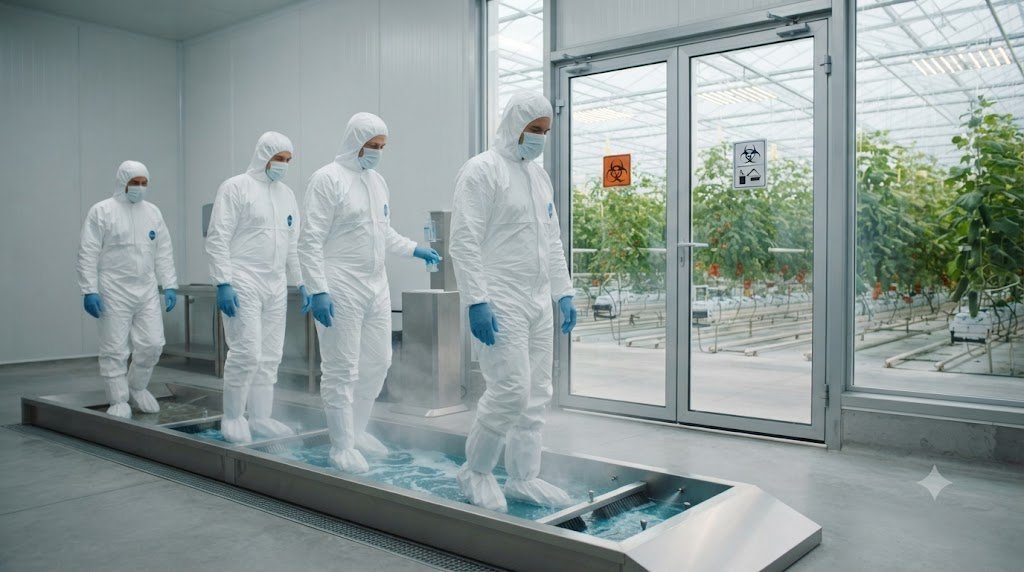
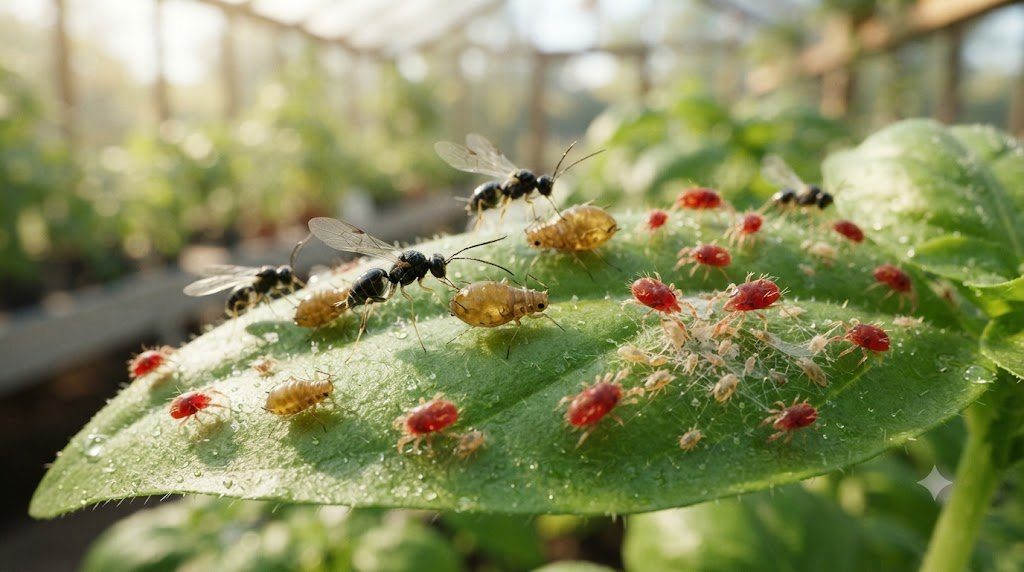
Recirculating untreated greenhouse leachate poses an existential biosecurity hazard. If a single plant in a 2-hectare facility becomes infected with a waterborne root pathogen, closed-loop recirculation pumps that pathogen directly to every root zone across the facility within hours! Recirculating runoff must undergo mandatory Industrial Water Disinfection prior to re-injection:
1. High-Dose UV-C Photolysis (Commercial Benchmark): Drainage water passes through quartz sleeve reactors illuminated by high-output amalgam UV-C lamps emitting at 253.7 nm. While standard drinking water requires a UV dose of 40 mJ/cm², horticultural pathogen disinfection mandates an intensive UV-C dose of 150 to 250 mJ/cm². This high-energy photonic irradiation penetrates microbial cell walls, dimerizing thymine bases in viral and fungal DNA. It completely eradicates zoosporic water molds (Pythium ultimum, Phytophthora cryptogea) and devastating plant viruses (Tomato Mosaic Virus, ToMV; Pepino Mosaic Virus, PepMV) without creating toxic chemical residues.
2. Ozone (O₃) Oxidation: Ozone gas generated from concentrated oxygen is injected into drainage contact towers at concentrations of 2.0 to 5.0 mg/L (maintaining a redox potential > 750 mV for 10 minutes). Ozone instantly oxidizes bacterial and fungal cell membranes. However, ozone also oxidizes valuable iron chelates (converting active Fe-DTPA into insoluble rust); consequently, all iron chelates must be re-dosed downstream of the ozone reactor.
3. Thermal Pasteurization: Heating drainage water to 95°C for 30 to 45 seconds using plate heat exchangers powered by boiler waste heat provides 100% biological kill across all pathogens. The pasteurized water is cooled against incoming cold drainage water via counter-current heat recovery plates, saving 85% of thermal energy.
🛡️ Filtration Prerequisite: Pre-UV Multi-Media Sand Filtration
Never send raw drainage water directly to UV-C or ozone reactors! Suspended organic root debris, dead root hairs, and substrate dust create ‘optical shading,’ allowing fungal spores to ride behind particulate shadows unharmed. Always pass drainage through automatic backwashing multi-media sand filters and 10-micron disc filters to achieve UV Transmittance (UV-T) > 85% before disinfection.
6. High-Frequency Runoff Monitoring and Automated Steering Rules
Precision closed-loop irrigation relies on real-time feedback loops governed by the Drainage Fraction (Runoff Percentage) and Runoff EC Dynamics. Specialized tipping-bucket drain meters and digital EC sensors installed on representative crop slabs continuously report data to the fertigation computer:
Drainage Fraction (%) = [Drainage Volume (L) ÷ Applied Irrigation Volume (L)] × 100
The Drainage EC Golden Rule:
- Substrate EC Climbing (> Feed EC + 0.8 mS/cm): Indicates that crop transpiration is outpacing water delivery; the root zone is drying out and concentrating residual salts. The computer responds by increasing irrigation shot frequency and lowering feed EC by 0.2 to 0.4 mS/cm to flush accumulated salts.
- Substrate EC Falling (< Feed EC + 0.2 mS/cm): Indicates excessive irrigation flushing; crops are consuming nutrients faster than water. The computer responds by widening the time interval between shots and increasing feed EC by 0.2 to 0.3 mS/cm to steer the crop toward generative balance.
Commercial vine crops target a consistent daily Drainage Fraction of 25% to 35%. This provides sufficient leaching action to prevent localized micro-salt pockets within the substrate core while capturing all runoff for recirculation.
7. Automated Multi-Channel Dosing Injection Stations
High-tech fertigation systems utilize automated Multi-Channel Direct-Injection Dosing Rigs equipped with high-precision magnetic flowmeters and variable-speed peristaltic or stepper motor dosing pumps. Concentrated fertilizer stock solutions are divided into separate incompatible stock tanks:
- Tank A (Calcium & Iron): Calcium nitrate, potassium nitrate, and iron chelates (Fe-DTPA). Sulfates and phosphates are strictly excluded from Tank A to prevent concentrated calcium sulfate (gypsum) and calcium phosphate precipitation!
- Tank B (Phosphates, Sulfates & Micronutrients): Monopotassium phosphate (MKP), potassium sulfate, magnesium sulfate (Epsom salts), and trace micronutrients (manganese, zinc, boron, copper, molybdenum).
- Tank C (Acid / Base Corrector): Concentrated nitric acid (HNO₃, 65%) or phosphoric acid (H₃PO₄, 75%) for precision pH down-regulation.
- Tank D (Recirculating Clean Drainage): Disinfected clean drainage water blended with fresh Reverse Osmosis (RO) permeate at calibrated mixing ratios (typically 30% to 50% drainage blend).
The fertigation computer uses multi-parameter PID control algorithms to dose stock solutions from Tanks A and B simultaneously into a high-shear hydrodynamic mixing chamber, ensuring homogenous blending and instant EC and pH stabilization before the nutrient water enters the greenhouse distribution main.
8. Mass Spectrometry and Weekly ICP-OES Solution Recalibration
While online EC and pH sensors provide instantaneous macro-level monitoring, they cannot report the individual concentration of specific mineral ions. In high-tech recirculating operations, agronomy teams collect laboratory drain and feed samples every Monday morning for Inductively Coupled Plasma Optical Emission Spectrometry (ICP-OES) analysis.
Within 24 hours, the laboratory reports exact parts-per-million (ppm) concentrations for 14 individual elements (N, P, K, Ca, Mg, S, Fe, Mn, Zn, B, Cu, Mo, Na, Cl). The head agronomist inputs these lab results into specialized nutritional mass-balance software (such as NutriFlex or Hoogendoorn Plant-Balance). The software recalculates the precise recipe corrections needed in Tanks A and B to replenish exactly what the plants consumed while compensating for accumulated background ions, ensuring uninterrupted, peak photosynthetic crop performance week after week.