🥒 Commercial CEA Agronomy: High-Wire European English Cucumbers
A rigorous agronomic monograph detailing the high-speed cultivation of commercial English long cucumbers (Cucumis sativus). We evaluate all-female parthenocarpic flowering genetics, high-wire umbrella vs. continuous wire trellising, rapid 14-day crop turnover mechanics, Powdery Mildew (Podosphaera xanthii) genetic resistance, and precision humidity steering.
Among all commercial vegetable crops cultivated in high-tech Controlled Environment Agriculture (CEA), the European Long English Cucumber (Cucumis sativus) holds the undisputed title of the fastest-growing commercial fruiting plant on Earth. Under optimized high-light glasshouse conditions, an English cucumber vine grows at an astonishing velocity of up to 10 centimeters per day, with newly set fruitlets developing from female flower anthesis to full 400-gram market maturity in a blistering 12 to 14 days!
This immense metabolic speed presents extraordinary commercial opportunities paired with severe agronomic vulnerabilities. An agronomist managing high-wire cucumbers has zero margin for error: a minor irrigation calculation error or delayed de-leafing protocol that would take two weeks to manifest in tomatoes can throw a cucumber crop into catastrophic fruit abortion within 48 hours. In this comprehensive dissertation, we examine the genetics of complete gynoecious parthenocarpy, trellising architectures, powdery mildew gene resistance breeding, and the rapid crop turnaround cycles that define profitable commercial cucumber facilities.
1. Parthenocarpy Genetics and Complete Gynoecious Flower Expression
Traditional field cucumber cultivars are monoecious, producing separate male and female flowers that require insect pollination. For commercial greenhouse production, monoecious varieties are completely useless: if a greenhouse cucumber flower is fertilized by bee pollination, the resulting fruit develops bitter bitter compounds, forms swollen bulbous seed cavities, and becomes totally unmarketable.
Modern commercial English greenhouse cultivars (such as ‘Corinto’, ‘Proloog’, ‘Verdon’) are bred with two revolutionary genetic traits:
1. Complete Gynoecious Expression (100% Female Flowers): Every single node along the vine produces exclusively female flowers containing developed ovaries. Breeders achieve complete gynoecy through the fixation of the dominant Female (F) gene and recessive andromonoecious (m) loci, eliminating non-productive male flowers entirely.
2. Obligate Parthenocarpy: The female flowers possess genetic parthenocarpy (governed by the P gene complex), allowing fruit to develop, swell, and mature into long, seedless, uniform cylinders without any pollination or fertilization whatsoever. In commercial cucumber facilities, bees and pollinators are strictly banned and excluded via 50-mesh insect screens; introducing bee pollination into an English cucumber greenhouse results in 100% crop destruction due to seed formation and fruit deformities.
| English Cucumber Commercial Cultivar | Breeding Company | Flowering Habit | Trellising Compatibility | Key Disease Resistance Profile |
|---|---|---|---|---|
| Corinto F1 | Enza Zaden | 100% Gynoecious Parthenocarpic | High-Wire & Traditional Umbrella | HR: Ccu, Px; IR: CVYV, CMV, PRSV |
| Proloog F1 | Rijk Zwaan | All-Female; Semi-Multi Fruit | Modern High-Wire High-Density | HR: Ccu; IR: Px (Powdery Mildew), CYSDV |
| Verdon F1 | De Ruiter / Bayer | Single-Fruit per Node | High-Wire Inter-Lit Winter | HR: Ccu, Px; IR: CGMMV (Green Mottle Virus) |
| Picowell F1 (Mini Cucumber) | Rijk Zwaan | Multi-Fruit (3 – 4 per node) | High-Wire High-Density Snack | HR: Ccu, Px; IR: CMV, CVYV |
2. High-Wire vs. Traditional Umbrella Trellising Systems
Commercial cucumber growers utilize two competing structural trellising methodologies:
1. The High-Wire System (Modern Commercial Gold Standard):
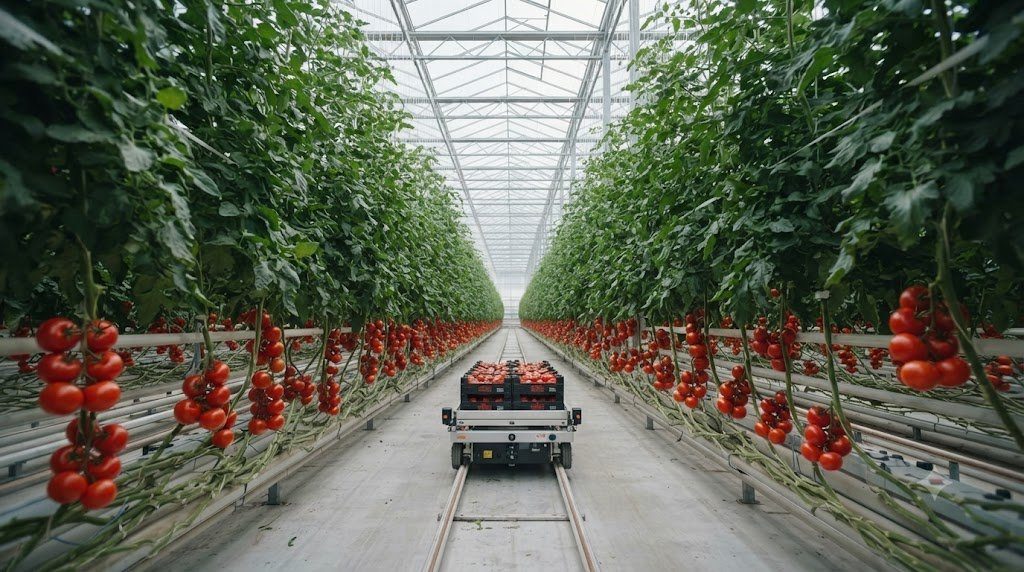
- Adapted from tomato production, the vine is trained vertically on twine suspended from a 4.5-to-5.0-meter overhead wire.
- All lateral side shoots are pinched out immediately. The main stem produces one single fruit per leaf node. As fruit is harvested, the vine is lowered and leaned horizontally along floor supports.
- Agronomic Advantage: High-wire cultivation delivers perfectly straight, premium grade-A cucumbers with uniform dark green color, eliminating the curved, yellow-bellied culls common in umbrella systems. Yields are 25% to 35% higher, and labor efficiency is maximized via standardized trolley operations.
2. The Traditional Umbrella System:
- Vines are trained up a vertical twine to a low wire at 2.0 to 2.2 meters. All flowers and side shoots on the bottom 80 cm of the main stem are completely stripped. From 80 cm to the wire, main stem fruits are harvested.
- Once the growing tip reaches the wire, it is pinched off (topped). Two lateral side-shoots are allowed to emerge and hang downward like the ribs of an umbrella, fruiting as they cascade toward the floor.
- Tradeoffs: Umbrella systems require lower initial trellis heights and lower Capex, but suffer from heavy labor costs (untangling descending vines) and produce high percentages of curved fruit as hanging cucumbers contact leaves and wires.
3. Fruit Abortion Dynamics and Sink-to-Source Balance
Because an all-female parthenocarpic cucumber vine attempts to set a fruit at every single leaf node, the plant can easily establish 15 to 20 developing fruitlets simultaneously. A young vine lacks the photosynthetic leaf area (source) to nourish that many rapidly expanding fruit sinks!
The Biological Abortion Mechanism: If carbohydrate demand from fruit exceeds daily photosynthetic sugar production, the plant’s internal survival mechanism triggers Fruit Abortion. Developing fruitlets at upper nodes turn pale yellow, shrivel, and desiccate into dry mummies. If abortion occurs erratically, the crop enters violent yield cycles—harvesting 20 fruit one week, followed by two weeks of zero harvest!
Surgical Fruit Thinning Protocols: To maintain steady, continuous commercial production, growers execute weekly Fruit Thinning:
- Single-Fruit Discipline: Standard English varieties are thinned strictly to one fruit every two leaf nodes during low-light winter months, or one fruit per node during bright summer periods.
- Multi-Fruit Varieties (Snack / Persian Cucumbers): Mini cucumbers (12 to 15 cm length) can support 2 to 3 fruits per node, provided daily DLI exceeds 22 mol/m²/day.
💧 Commercial Humidity Steering: Cucumber Guttation Management
Cucumbers have immense, thin leaves with high stomatal densities that transpire up to 6.0 L/m²/day. At night, ensure Leaf VPD remains between 0.4 and 0.6 kPa. If night VPD drops below 0.2 kPa, severe root pressure forces water into leaf margins (guttation). Guttation water contains dissolved salts that burn leaf margins, creating entry portals for fatal gummy stem blight (Didymella bryoniae) infections.
4. Powdery Mildew Genetics: Breeding the PM-Resistant Canopy
The single greatest biological pathogen threatening commercial cucumber production globally is Powdery Mildew (predominantly Podosphaera xanthii and Golovinomyces cichoracearum). In unmanaged greenhouses, powdery mildew covers broad cucumber leaves in powdery white fungal colonies within 5 days, desiccating foliage and halting photosynthesis.
Modern commercial cultivars integrate high levels of Intermediate Resistance (IR) or High Resistance (HR) bred from wild Asian cucumber accessions. Genetic resistance operates by triggering localized hypersensitive cell death (HR) at the site of fungal haustorium penetration, blocking the fungus from extracting host nutrients. When paired with environmental humidity management (preventing relative humidity spikes > 85% at night) and preventative bio-fungicide sprays (potassium bicarbonate, Bacillus subtilis), genetic resistance eliminates the need for toxic synthetic chemical fungicides.
5. Rapid Crop Turnaround Cycles: The 3-to-4 Crop Annual Schedule
Unlike tomatoes that run continuously for 10 to 11 months on a single vine, commercial cucumber facilities maximize profitability by executing Three or Four Complete Crop Turnarounds per Year:
A cucumber vine operates at peak biological efficiency for approximately 14 to 16 weeks. Beyond week 16, root systems suffer gradual senescence, vascular bundles accumulate tyloses, and stem lowering coils become congested with old wood, slowing fruit development. High-tech facilities execute rapid crop transitions:
- Inter-Planting Strategy: Three weeks before the old crop is scheduled for termination, new grafted cucumber seedlings are planted directly between existing mature stems. The old canopy is stripped of lower leaves to allow sunlight to penetrate down to the young transplants.
- The 48-Hour Purge: Once the new seedlings reach the trellis wire, the old crop is severed at the base, shredded into organic compost bins, and cleared from the greenhouse within 48 hours. By avoiding prolonged shutdown windows, commercial facilities achieve 360 days of continuous commercial cucumber harvesting annually.
6. Post-Harvest Film Shrink-Wrapping and Shelf Life Preservation
English cucumbers possess a razor-thin, edible waxy skin with zero thick rind (unlike American slicing cucumbers that have thick rinds waxed with food-grade paraffin). Consequently, an exposed English cucumber loses up to 3.5% of its total fresh weight in water per day through transpiration at room temperature, turning soft, rubbery, and wrinkled within 72 hours of harvest.
To preserve pristine crispness, commercial packing lines route cucumbers immediately through Automated Heat-Shrink Wrapping Machines. Each cucumber is sealed in micro-perforated 15-micron low-density polyethylene shrink film passing through a 180°C hot-air tunnel for 3 seconds. The film locks in transpirational moisture, reducing daily water loss to less than 0.1% and extending retail supermarket shelf life to 18 to 25 days at 12°C storage temperatures.
7. Precision Fertigation Chemistry: High-Potassium and Silicon Regimes
Commercial English cucumbers exhibit extraordinary mineral absorption rates, demanding specialized fertigation management to maintain vegetative vigor alongside heavy fruit loads:
1. The Potassium-to-Nitrogen Dynamic: During early vegetative establishment, feed solutions maintain a balanced K:N ratio of 1.2:1.0 (EC 1.8 to 2.0 mS/cm). However, once heavy fruit filling initiates at node 8, the plant’s potassium demand surges dramatically. Potassium drives the osmotic potential required to pump water into expanding cylindrical fruit cells. High-tech facilities elevate the K:N ratio to 1.8:1.0 to 2.2:1.0, supplying 280 to 340 ppm of bioavailable K⁺.
2. Soluble Silicon Bio-Fortification: Cucumbers are hyper-accumulators of silicon (Si). Dosing monosilicic acid (H₄SiO₄) or potassium silicate at 25 to 35 ppm Si into the drip solution results in dense polymerization of amorphous silica within leaf epidermal cell walls. This creates a physical mechanical barrier that impedes fungal appressoria penetration (particularly Powdery Mildew) and deters sucking insects, while simultaneously enhancing leaf turgor and light interception.
8. Crop Registration and Vegetative-to-Generative Balance Auditing
Because high-wire cucumber vines grow up to 10 cm per day, agronomy teams execute structured Crop Registration Audits every Monday morning across representative sample plants in each greenhouse compartment:
- Stem Elongation Velocity: Measure the weekly vertical growth from the previous week’s registration tag to the apex. Normal growth is 50 to 70 cm per week; growth exceeding 80 cm indicates excessive temperature or nitrogen.
- Stem Caliper Thickness: Measured with digital vernier calipers at the top flowering node. Target caliper is 8.5 to 10.0 mm. Thinner stems (< 7.5 mm) signal carbohydrate exhaustion, demanding immediate fruit pruning.
- Flowering Node Distance: Measure the distance between the growing tip and the highest open female flower. The open flower must sit between 18 and 22 cm below the apex. If flowers open within 10 cm of the top, the crop has become dangerously generative.
9. Rootzone Dissolved Oxygen Dynamics and Pythium Mitigation in Slabs
Unlike tomatoes which can tolerate moderate substrate moisture fluctuations, cucumber root systems have an extraordinarily high respiratory oxygen consumption rate. Cucumber root hairs consume dissolved oxygen up to 35% faster than solanaceous crops.
When substrate temperatures exceed 24°C, dissolved oxygen solubility in rockwool slab pore-water drops below 5.5 mg/L. Hypoxic root cells leak malic acid and glucose into the rhizosphere, creating chemotactic signals that attract swimming zoospores of Pythium aphanidermatum. High-tech facilities prevent root-zone collapse by oxygenating irrigation water with pure oxygen gas (maintaining 12 to 14 mg/L DO) and maintaining an Air-Filled Porosity above 22% via structured dry-back cycles.
10. Mechanical De-Leafing and Lowering Logistics in Commercial Facilities
High-wire cucumber canopies generate massive, broad leaves that intercept virtually 100% of overhead light. If lower senescing leaves are permitted to remain on the vine, they shade the root zone, restrict horizontal ventilation airflow, and create humid microclimates that foster Botrytis stem rot and whitefly colonization.
Commercial facilities enforce strict Weekly De-Leafing Protocols: as each cucumber is harvested, the corresponding leaf node and the node directly beneath it are stripped away using sanitized ergonomic de-leafing rings. Defoliating the bottom 1.2 meters of the stem exposes the rootzone to gentle warm airflow, ensures uniform air exchange, and allows the remaining 16 to 18 upper canopy leaves to function at peak photosynthetic light assimilation.
11. Biological IPM: Managing Western Flower Thrips and Two-Spotted Spider Mites
The vast, warm foliage of a high-tech cucumber house provides an ideal breeding environment for destructive arthropod pests, principally Western Flower Thrips (Frankliniella occidentalis) and Two-Spotted Spider Mites (Tetranychus urticae). Thrips feed on tender young fruitlets, causing severe silvering scars and fruit curving, while vectoring Tomato Spotted Wilt Virus (TSWV).
Commercial facilities implement biological biocontrol protocols: predatory mites (Amblyseius swirskii and Neoseiulus cucumeris) are broadcast via mechanical blowers across the canopy at 50 to 100 mites per square meter weekly. In the rootzone, soil-dwelling predatory mites (Stratiolaelaps scimitus) and entomopathogenic nematodes (Steinernema feltiae) target thrips pupae in the slab crevices, achieving complete biological suppression without chemical pesticide residues.
12. Automated Grading, Optical Sizing, and Post-Harvest Cooling Kinetics
Upon harvest, commercial English cucumbers are transported in padded plastic bins to the facility’s automated packing hall to maintain uniform wholesale grading:
1. Optical Vision Grading Lines: Harvested cucumbers pass beneath high-resolution 3D optical cameras running computer-vision algorithms that measure fruit length, diameter, degree of curvature, and skin color uniformity at 15 units per second. Cucumbers are categorized into commercial size grades (Small: 300–350g, Medium: 350–400g, Large: 400–500g). Any cucumber exhibiting curvature greater than 15 degrees is diverted to secondary slicing markets.
2. Rapid Hydro-Cooling and Moisture Retention: Cucumbers harvested during warm summer afternoons enter forced-air cooling rooms held at 12°C to 13°C (54°F to 55°F) with 95% relative humidity within 45 minutes of harvest. Because chilling injury occurs rapidly below 10°C, the cooling corridor is monitored continuously by automated thermistors. This rapid stabilization halts metabolic respiration while preventing the severe water loss that degrades commercial crispness.