🪣 Commercial Vine Crop Agronomy: Dutch Bato Bucket Fertigation Systems
A rigorous agronomic and civil engineering treatise detailing Dutch Bato Bucket (Dutch Bucket) fertigation for commercial high-wire indeterminate crops (tomatoes, sweet peppers, cucumbers, eggplants). We evaluate bucket siphon elbow fluid mechanics, substrate blending (perlite vs. hydroton), pulse irrigation scheduling, drainage fraction leaching kinetics, and vegetative-to-generative hormonal steering.
For commercial Controlled Environment Agriculture facilities cultivating heavy, long-cycle indeterminate fruiting vine crops (beefsteak tomatoes, cluster tomatoes, Dutch sweet bell peppers, and Japanese eggplants), the physical demands placed on the root zone are immense. These crops grow continuously for 10 to 12 months, achieving stem lengths of 12 to 15 meters while producing 60 to 85 kilograms of marketable fruit per square meter. Supporting this staggering biomass accumulation requires an indestructible root-zone platform that combines absolute hydraulic drainage reliability, massive root aeration, and surgical precision over irrigation feeding.
The premier commercial technology deployed worldwide for heavy vine crops is the Dutch Bato Bucket System (commonly known as the Dutch Bucket or Dutch Pot). Pioneered in the Netherlands and adopted across commercial greenhouse mega-projects from Canada to Mexico and the Middle East, Bato buckets isolate individual plant root systems within durable molded polypropylene containers linked by a continuous subterranean siphon drainage pipe. In this comprehensive dissertation, we examine the fluid mechanics of the internal siphon elbow, substrate physics, precision pulse fertigation kinetics, and the mathematical steering of drainage fractions and electrical conductivity.
1. Architectural Morphology and Siphon Elbow Fluid Mechanics
The mechanical genius of the Dutch Bato Bucket resides in its patented base geometry and internal Siphon Drainage Elbow:
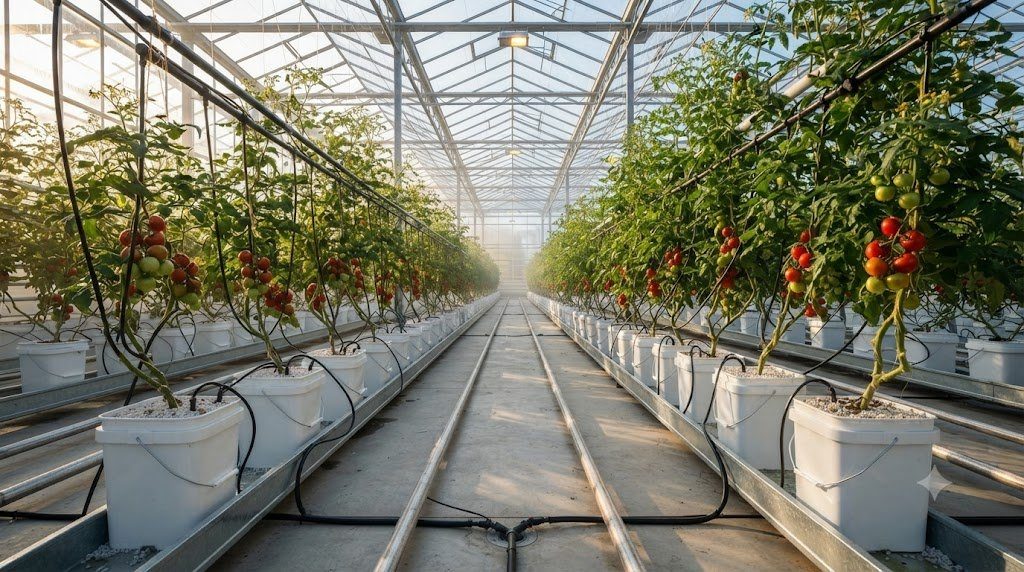
Container Architecture: Commercial Bato buckets are precision-molded from UV-stabilized, food-grade polypropylene, typically measuring 30 cm long, 25 cm wide, and 23 cm deep (providing a substrate volume of 11 to 14 liters). Buckets are aligned in continuous single or double rows along greenhouse floor rails, spaced on 40 to 50 cm centers (yielding a planting density of 2.5 to 3.2 plants per square meter).
The Siphon Elbow Fluid Mechanism: At the bottom of each bucket, a molded recess houses a specialized L-shaped siphon elbow pipe that connects through a rubber grommet directly into a continuous 50-mm (2-inch) rigid PVC drainage pipe running beneath the bucket row:
- The Permanent 5-cm Safety Reservoir: The siphon elbow intake sits elevated precisely 5 centimeters (2 inches) above the bucket floor. This elevation creates a permanent 2.0-to-2.5-liter liquid reservoir of nutrient water resting at the bottom of every bucket beneath the substrate mass. If an electrical pump fails or a main water pipe fractures during a blistering 35°C afternoon, this safety reservoir prevents catastrophic crop wilting, sustaining massive fruiting plants for 24 to 36 hours without fresh irrigation.
- The Aerodynamic Siphon Action: When fresh irrigation pulses inject nutrient water from the top, the liquid level in the bucket rises above the siphon elbow crest. This triggers an instantaneous siphon action: excess water and old depleted nutrient solution are pulled rapidly out of the bottom reservoir and discharged into the central drainage pipe. Once the water level drops back to the 5-cm mark, air enters the siphon intake, instantly breaking the siphon seal. This rapid drainage pulls fresh atmospheric oxygen down through the entire upper root zone, completely aerating the substrate after every shot!
| Engineering / Agronomic Metric | Dutch Bato Bucket Platform | Standard Rockwool Slab System | Operational & Horticultural Significance |
|---|---|---|---|
| Substrate Medium Flexibility | Perlite, Coconut Coir, Hydroton, Blends | Rockwool Stone Wool Only | Bato buckets allow 100% loose-fill substrate customization |
| Root System Physical Isolation | Individual (2 plants per bucket) | Shared (4 – 5 plants per slab) | Buckets isolate root diseases from neighboring plants |
| Emergency Water Safety Buffer | High (Permanent 2.5 L bottom reservoir) | Low (Relies strictly on slab retention) | Bato buckets provide 24+ hrs buffer against pump failure |
| Substrate Reusability | High (Perlite re-used for 4 – 6 years) | Zero (Single-season disposal) | Slashes annual substrate recurring replacement costs by 70% |
| Installation Capital Cost | Moderate ($18 – $28 per m²) | Low ($12 – $18 per m²) | Buckets require higher initial plastic hardware investment |
| Substrate Flushing Velocity | Instantaneous (High hydraulic throughput) | Moderate (Capillary diffusion limited) | Buckets allow rapid correction of toxic salt accumulation |
2. Substrate Physics in Bato Buckets: Coarse Perlite vs. Coco Blends
Unlike flat slab systems that are tied to specific pre-formed mineral slabs, Bato buckets offer growers complete freedom to customize substrate physical characteristics:
1. 100% Coarse Horticultural Perlite (#3 / #4 Grade): The traditional commercial standard for Dutch buckets. Coarse perlite granules create massive void spaces, delivering an astounding Air-Filled Porosity of 35% to 42%. Water flushes through perlite rapidly with zero resistance. Perlite is completely inorganic, chemically inert (CEC < 2.0), and will not decompose biologically. After a 10-month tomato crop, perlite can be steam-pasteurized directly inside the buckets and replanted for up to 5 to 6 consecutive seasons, saving tens of thousands of dollars in annual substrate disposal and repurchasing expenses.
2. 70/30 Coconut Coir & Coir Chip Blends: Increasing numbers of commercial producers utilize buffered coconut coir blends in Bato buckets. The inclusion of 30% coarse coir husk chips maintains high AFP (22% to 26%) while the 70% coir pith provides superior capillary water retention compared to perlite. Coir blends reduce required daily irrigation pulse frequency from 20 shots per day down to 8 to 12 shots per day, reducing pump mechanical wear while providing exceptional organic crop branding.
3. Pulse Fertigation Dynamics: Micro-Shots vs. Gravitational Drainage
Cultivating heavy vine crops in high-drainage Bato buckets requires a transition away from infrequent, heavy waterings toward High-Frequency Pulse Fertigation:
Rather than applying 500 ml of water three times per day (which causes rapid nutrient leaching followed by severe substrate dry-out), automated irrigation computers deliver small micro-shots of 80 to 120 ml per plant pulsed 15 to 25 times throughout daylight hours. Each micro-shot is triggered by cumulative solar radiation integrals measured by rooftop pyranometers (typically one shot every 100 to 140 Joules/cm² of accumulated solar energy).
This precision pulsing maintains substrate moisture and electrical conductivity in an ultra-stable equilibrium throughout peak midday transpiration spikes, preventing osmotic shocks and ensuring continuous, uninterrupted calcium flow into developing fruit clusters.
💧 Mechanical Calibration Rule: Pressure-Compensating Drip Emitters
Never use cheap non-compensating drip stakes in long Bato bucket rows! In a 60-meter greenhouse row, friction losses cause water pressure to drop toward the end of the line. Always install Pressure-Compensating (PC) button drippers (typically 2.0 or 4.0 L/h) equipped with anti-drain check valves. PC drippers guarantee that every bucket in the facility receives exactly identical irrigation volumes (± 2% flow uniformity) regardless of pipeline length.
4. Drainage Fraction (Runoff Percentage) and Salt Flushing Physics
In soilless bucket systems, the Drainage Fraction (Runoff Percentage) is the non-negotiable metric that governs root health and prevents toxic mineral salinity buildup:
Drainage Fraction (%) = [Daily Drainage Volume (L) ÷ Daily Injected Volume (L)] × 100
In high-wire tomato and cucumber production, commercial agronomists target a consistent daily Drainage Fraction of 25% to 35%. This 30% excess irrigation is not wasted water; it performs three essential physical functions:
- Flushing Unabsorbed Residual Salts: As plants selectively absorb water and specific ions, residual ions (especially sodium and sulfates) accumulate in substrate pore spaces. The 30% drainage fraction flushes these concentrated salts out through the siphon elbow into the return gutter.
- Thermal Root Cooling: Fresh, cool irrigation water (18°C to 20°C) displaces hot water trapped in the buckets, cooling root zones during extreme summer heatwaves.
- Re-Oxygenation: The descending liquid column pulls fresh atmospheric air into the substrate pores behind it, driving dissolved oxygen replenishment.
5. Runoff EC Steering: The Vegetative-to-Generative Agronomic Dial
By monitoring the differential between Feed EC (the electrical conductivity of injected water) and Drain EC (the conductivity of leachate discharging from the siphon elbow), the head grower steers the morphological balance of the crop:
The Target Differential Corridor: Under balanced commercial growing conditions, the target Drain EC is maintained at 0.4 to 0.8 mS/cm above Feed EC (e.g., Feed EC = 2.4 mS/cm, Drain EC = 2.8 to 3.2 mS/cm).
- Steering Generatively (High Drain EC, Feed + 1.2 to 1.8 mS/cm): When crop vines are growing too thick and vegetative (excessive green leaves, thick stems, but delayed flowering and pale fruit), the grower delays the first morning irrigation shot by 90 minutes after sunrise and allows afternoon substrate dry-back to widen. Substrate EC concentrates. The resulting mild osmotic drag suppresses vegetative stretching, forces carbohydrates into flower clusters, and dramatically increases fruit Brix sugar content.
- Steering Vegetatively (Low Drain EC, Feed + 0.1 to 0.3 mS/cm): When crops become thin, weak, and over-burdened with massive fruit loads, the grower starts irrigation 30 minutes before sunrise, increases shot frequency, and boosts the drainage fraction to 40%. The substrate EC drops. Plentiful free water stimulates rapid cell division, expanding new foliage to support upcoming fruit flushes.
6. Pathogen Control and Sanitation in Recycled Bucket Systems
Between annual cropping cycles, Bato bucket facilities execute intensive sanitation to eliminate fungal spores and viral pathogens before replanting:
Buckets and siphon elbows are thoroughly flushed with high-pressure stabilized hydrogen peroxide and peracetic acid (PAA) foam solutions. When perlite substrate is reused, the entire bucket row is connected to a closed steam manifold: high-temperature agricultural steam (95°C / 203°F) is injected through the drainage pipes, cooking the perlite substrate in-situ for 60 minutes. Thermal pasteurization eradicates nematodes, Fusarium wilt, Verticillium wilt, and bacterial canker without applying toxic synthetic soil fumigants, ensuring pristine biological conditions for incoming seedling transplants.
7. Commercial Yield Performance and 10-Year Financial Returns
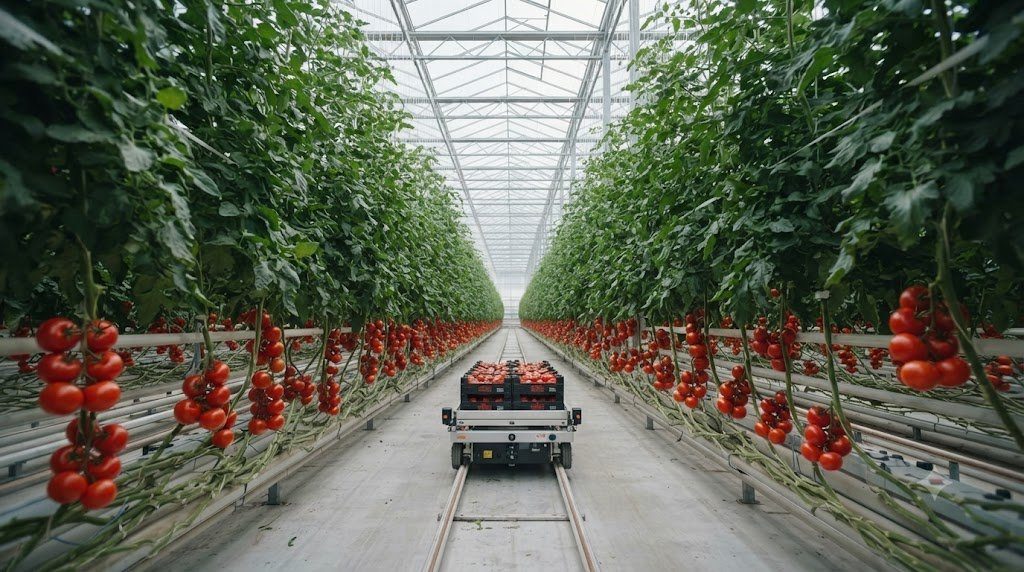
Investing in commercial Dutch Bato Bucket infrastructure delivers exceptional multi-year financial returns. While initial installation requires a capital premium over bare field soil, commercial greenhouse operations achieve sustained yields of 65 to 80 kg of indeterminate tomatoes per square meter annually—more than 10 times the yield of open-field farming.
Furthermore, because the heavy-duty polypropylene buckets and PVC drainage manifolds possess an operational lifespan exceeding 15 to 20 years, the annualized capital cost is negligible (less than $1.20/m²/year). When combined with 90% water recycling and 70% substrate reusability, Dutch Bato Bucket systems deliver one of the highest returns on invested capital (ROIC) across the entire commercial horticulture sector.
8. Piping Hydraulic Gradient and Drainage Header Sizing
In large commercial Bato bucket installations spanning rows of 50 to 80 meters, improper drainage pipe sizing can cause catastrophic hydraulic backup. As dozens of buckets discharge simultaneous siphon pulses during high-radiation peak irrigation events, the central drainage manifold experiences surging transient fluid volumes.
Drainage headers must be engineered with rigid 50 mm or 63 mm Schedule 40 PVC pipe installed with a continuous laser-calibrated slope of 1.0% to 1.5% grade directed toward floor drainage sumps. Furthermore, installing vertical atmospheric vacuum relief pipes (air vents) at the elevated terminus of each bucket row prevents hydraulic airlocks, ensuring that wastewater glides by gravity without siphon stalls or floor overflow.
9. Root Inspection and Seasonal Turnaround Operations
At the conclusion of a 45-week indeterminate cropping season, commercial crews execute efficient turnaround protocols. The individual modular nature of Bato buckets permits rapid plant removal: trellising twines are unclipped from overhead wires, plant stems are severed at substrate level, and the root-perlite ball is hoisted out of the bucket.
Substrate root screens located over the siphon elbow are inspected for fine root hair intrusion and cleared using stainless steel brushes. By maintaining a clean physical siphon barrier, commercial facilities achieve seamless turnaround schedules, completing root extraction, chemical sterilization, and re-planting of new grafted seedlings across multi-hectare facilities within 7 to 10 working days.
10. Micro-Irrigation Drip Line Maintenance and Acid Descaling Protocols
Because high-frequency pulse fertigation in Bato buckets involves dozens of daily start-stop cycles, micro-drip emitters are highly susceptible to chemical mineral scaling and bacterial slime clogging. Calcium carbonate, calcium phosphate, and iron precipitates accumulate inside emitter labyrinths over months of operation, reducing discharge flow uniformity and starving random plants in the row.
To preserve 100% emission uniformity, commercial facilities execute scheduled Line Descaling Purges. Every 4 to 6 weeks, the irrigation lines are flushed with food-grade nitric acid (HNO₃) or technical peracetic acid (PAA) at an adjusted pH of 4.0 to 4.5 for 60 minutes. The acidic shock dissolves mineral scale crusts instantly, while oxidizing bacterial polysaccharide slimes. Regular acid flushes guarantee that every emitter delivers its rated flow rate down to ± 1.5% precision throughout the entire multi-year production cycle.
11. Water Reservoir Aeration and Dissolved Oxygen in Fertigation Stock Tanks
While primary root aeration occurs inside the Bato bucket via gravitational drainage, delivering irrigation water with high baseline dissolved oxygen (DO) enhances nutrient uptake efficiency. Water stored in large stagnant underground mixing tanks often undergoes thermal de-oxygenation, with DO levels dropping below 5.0 mg/L.
High-performance commercial facilities install Venturi Air Injectors and Ceramic Submerged Diffusers within primary irrigation day-tanks. By circulating stock water through venturi nozzles, dissolved oxygen is elevated to 8.5 to 10.0 mg/L (100% saturation at 20°C) before entering high-pressure delivery pumps. Applying oxygen-rich fertigation solutions directly into the perlite matrix stimulates active root mitochondrial respiration, suppresses anaerobic Pythium zoospore germination, and accelerates calcium and phosphorus assimilation throughout heavy fruit-loading stages.